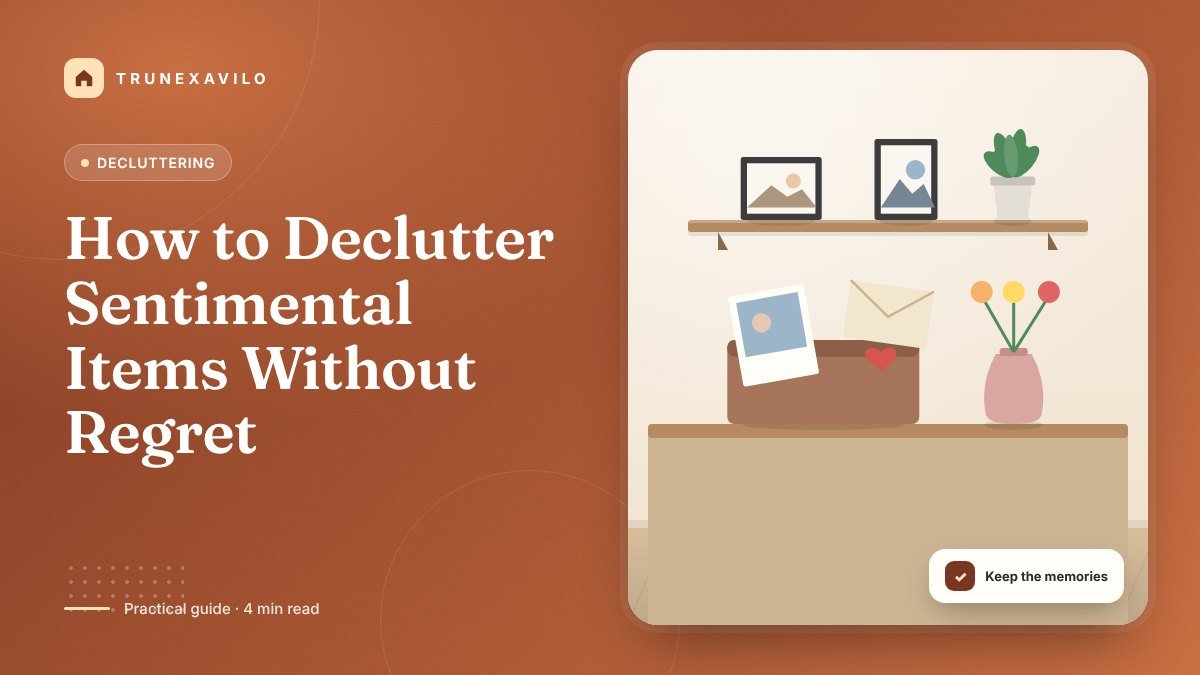
How to Declutter Sentimental Items Without Regret
A compassionate, practical guide to decluttering sentimental items, from gifts and inherited belongings to kids' artwork, with ways to preserve memories while freeing space.
On this page
Sentimental items are the hardest things to declutter. A sweater from a grandparent, a stack of children's drawings, letters from a friend: these objects hold memories and feelings, and letting them go can feel like letting go of the people and moments they represent.
You never have to get rid of something meaningful. But keeping everything can make it hard to enjoy what matters most. This guide offers a gentle, practical approach.
Start Last, Not First
If you're new to decluttering, leave sentimental items for later. Practice your decision-making on easier categories first, like kitchen tools or old clothing. By the time you reach sentimental items, you'll have more confidence and a clearer sense of what you value. Our decluttering for beginners guide suggests where to start.
Remember: The Memory Isn't in the Object
Objects can trigger memories, but they aren't the memories themselves. Keeping one meaningful item, or a photo of it, can preserve the same feeling as keeping a full box. Many people find that a smaller, curated collection actually makes it easier to appreciate the items they keep.
Give Yourself a Container Limit
Instead of deciding item by item what's "worth" keeping, decide how much space you'll devote to sentimental items. For example:
- One keepsake box per person
- One shelf for family heirlooms
- One binder for children's artwork per school year
The container becomes the limit. When it's full, you choose which items matter most. This turns a painful question ("Should I throw this out?") into a gentler one ("Which of these do I love most?").
Questions to Ask
- Does this item bring back a happy memory, or does it bring guilt or sadness?
- Would I want to display or use this?
- Is this the best representation of that memory, or do I have something better?
- If this were lost, how would I feel?
- Am I keeping it for myself or because I think someone expects me to?
Category-by-Category Ideas
Gifts
A gift's purpose is fulfilled when it's given. You're allowed to let go of gifts you don't use or love. If you're worried about hurt feelings, remember that most people would rather you have a clutter-free home than a closet full of obligations.
Inherited Items
Inherited belongings can feel especially heavy. Consider:
- Keeping one or two items that remind you of the person and using or displaying them.
- Offering other items to family members who might treasure them.
- Donating items so they can be useful to someone else.
Children's Artwork and Schoolwork
Children produce a lot of art. Try this:
- Display new art on a rotating board or wall.
- At the end of each month or term, choose a few favorites to keep.
- Photograph the rest and create a digital album or printed photo book.
- Let older kids help choose which pieces to save.
Clothing
Clothes from special occasions or loved ones can be hard to part with. Consider keeping one meaningful piece, turning fabric into a pillow or quilt, or framing a small item like a baby outfit.
Cards and Letters
Keep the ones with personal messages. Cards with only a signature can usually go. A small box or binder can hold a lifetime of meaningful letters.
Photos
Photos are both sentimental and voluminous. Remove duplicates, blurry shots, and photos of people or places you don't recognize. Scan the rest if you want to free physical space and protect them from damage.
Preserve Memories Digitally
Photographing sentimental items is one of the most effective tools for letting go. You can:
- Create a digital album of items you've donated.
- Write a short note about the memory each item represents.
- Make a printed photo book that takes up a fraction of the space.
Go Slowly and Allow Emotions
Decluttering sentimental items can bring up grief, nostalgia, or regret. That's normal. Take breaks, work in short sessions, and stop when you need to. It may help to have a supportive friend or family member with you.
If you're dealing with the belongings of someone who recently passed away, there's no need to rush. Many people find it easier to wait until they feel ready.
Display What You Love
Sentimental items deserve better than a dusty box in the attic. Display a few favorites on a shelf, frame meaningful items, or use heirlooms in everyday life. When you keep fewer items, you can honor them properly.
Storing What You Keep
- Use acid-free boxes or archival-safe containers for photos and paper.
- Store keepsakes in a cool, dry, dark place, not a damp basement or hot attic.
- Label boxes clearly with contents and names.
Frequently Asked Questions
Is it wrong to get rid of gifts? No. A gift's purpose is fulfilled when it's given and received with gratitude. You're allowed to let go of gifts you don't use or love.
What should I do with inherited furniture I don't like? Consider offering it to other family members first. If no one wants it, selling or donating it lets the piece be useful to someone else. Keep a photo if you'd like a reminder.
How do I store the sentimental items I keep? Use acid-free or archival-safe containers for photos and papers, and store keepsakes in a cool, dry place. Label boxes clearly.
The Bottom Line
Decluttering sentimental items isn't about erasing memories. It's about choosing the items that best represent the people and moments you love, so you can enjoy them instead of feeling buried by them. Go slowly, set container limits, preserve memories through photos, and display the pieces that matter most.