Fridge Organization: A Zone System That Cuts Food Waste
Learn how to organize your refrigerator by temperature zones so food stays fresh longer, leftovers get eaten, and your grocery money goes further.
On this page
The average household throws away a significant share of the food it buys, and much of that waste happens in the refrigerator. Leftovers disappear behind the milk, fresh herbs wilt in the back of a drawer, and a forgotten container becomes a science experiment.
A simple zone system changes that. When every type of food has a designated place, you can see what you have, use it before it goes bad, and shop more precisely. Here's how to set one up.
Start With the Right Temperature
Organization only works if your fridge is cold enough. The U.S. Food and Drug Administration recommends keeping your refrigerator at or below 40°F and your freezer at 0°F. Many fridges don't have an accurate built-in display, so an inexpensive appliance thermometer is worth having.
Understand Your Fridge's Natural Zones
Refrigerators don't hold a perfectly even temperature. Some areas run colder or warmer than others, and that's useful information.
- Door: the warmest part of the fridge because it's exposed to room air every time you open it.
- Upper shelves: fairly consistent temperatures, good for foods that don't need cooking.
- Lower shelves: typically the coldest part of the main compartment.
- Crisper drawers: designed to control humidity for produce.
A Simple Zone Map
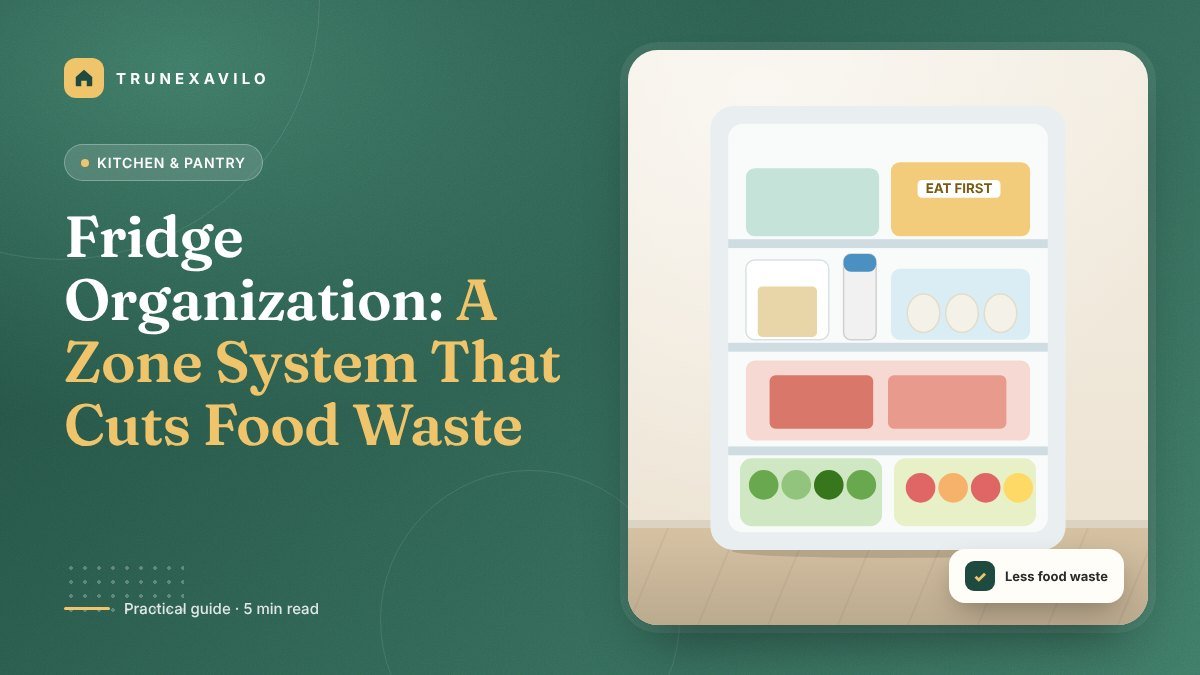
Door: Condiments and Drinks
Store items that are naturally preserved or that tolerate small temperature changes: condiments, salad dressings, jams, juice, and bottled water. Avoid keeping milk and eggs in the door, even though many fridges have an egg tray there. They last better in the main compartment.
Top Shelf: Ready-to-Eat Foods
This is the place for leftovers, prepared foods, drinks, and snacks that don't need cooking. Keeping ready-to-eat foods above raw foods is a basic food safety practice that prevents drips from contaminating them.
Middle Shelf: Dairy and Eggs
Milk, yogurt, cheese, and eggs belong in the center of the fridge where the temperature is steady. Keep eggs in their original carton, which protects them and shows the date.
Bottom Shelf: Raw Meat, Poultry, and Seafood
Raw meat goes on the lowest shelf, ideally in a dedicated bin or rimmed tray. If a package leaks, it won't drip onto anything else. This one change is one of the most important food safety habits in any kitchen.
Crisper Drawers: Produce, Separated
If your drawers have humidity settings, use them:
- High humidity (closed vent): leafy greens, herbs, and vegetables that wilt, such as broccoli and carrots.
- Low humidity (open vent): fruits that release ethylene gas, such as apples and pears, which can speed up ripening in nearby produce.
Create an "Eat First" Bin
The single most effective tool for reducing food waste is an "Eat First" bin. Choose one clear bin and place it at eye level. Anything that needs to be used soon goes in it: leftovers from two days ago, half an onion, an open container of sour cream, the last few strawberries.
Before you cook or snack, check the bin first. Families who use one often find they waste noticeably less food because forgotten items are suddenly impossible to miss.
Use Clear Bins to Create Categories
Bins make a fridge function like a set of drawers. You can pull out the entire "sandwich" bin for lunch prep instead of gathering items from three shelves. Helpful bin categories include:
- Sandwich and lunch fixings
- Snacks for kids
- Cheese
- Raw meat (on the bottom shelf)
- Meal prep ingredients for the week
Choose clear, easy-to-clean bins and measure your shelves before you buy. A turntable on one shelf is also handy for jars and small containers that would otherwise get lost in the back.
Label Leftovers With Dates
Keep a roll of masking tape and a marker near the fridge. When you store leftovers, add the contents and the date. As a general rule, many cooked leftovers are best eaten within three to four days. When in doubt, throw it out.
Plan Around What You Have
An organized fridge makes meal planning faster. Before you write a grocery list:
- Check the "Eat First" bin.
- Look at what produce needs to be used.
- Plan two or three meals that use those items.
- Only then add new items to your list.
This habit pairs well with the strategies in our guide to lowering your grocery bill.
A Weekly Five-Minute Reset
Pick one day each week, ideally the day before grocery shopping, to:
- Toss anything spoiled
- Wipe up spills
- Consolidate half-empty containers
- Move items that need eating into the "Eat First" bin
Five minutes a week prevents the kind of buildup that requires a full hour of scrubbing later.
Common Mistakes to Avoid
- Overpacking: Cold air needs to circulate. A crammed fridge cools unevenly.
- Storing everything in the door: Save it for condiments and drinks.
- Washing berries before storing: Extra moisture can speed up mold. Wash them just before eating.
- Putting hot food straight into a packed fridge: Divide large batches into smaller, shallow containers so they cool faster and more safely.
Frequently Asked Questions
Should I store eggs in the refrigerator door? It's better not to. The door is the warmest, least consistent part of the fridge. Keep eggs in their original carton on a middle shelf where the temperature is steadier.
How long do leftovers last in the fridge? Many cooked leftovers are best eaten within three to four days. Label containers with the date so you know how old they are, and freeze anything you won't eat in time.
Do I need special fridge bins to organize my refrigerator? No. Any clean, food-safe container that fits your shelves will work. Clear bins simply make it easier to see what's inside, and handles make them easier to pull out.
The Bottom Line
A zone-based fridge isn't about making your refrigerator look like a magazine photo. It's about putting each food where it lasts longest and where you'll see it in time to use it. Keep the temperature at 40°F or below, store raw meat on the bottom, separate your produce, and add an "Eat First" bin. You'll throw away less and spend less, week after week.