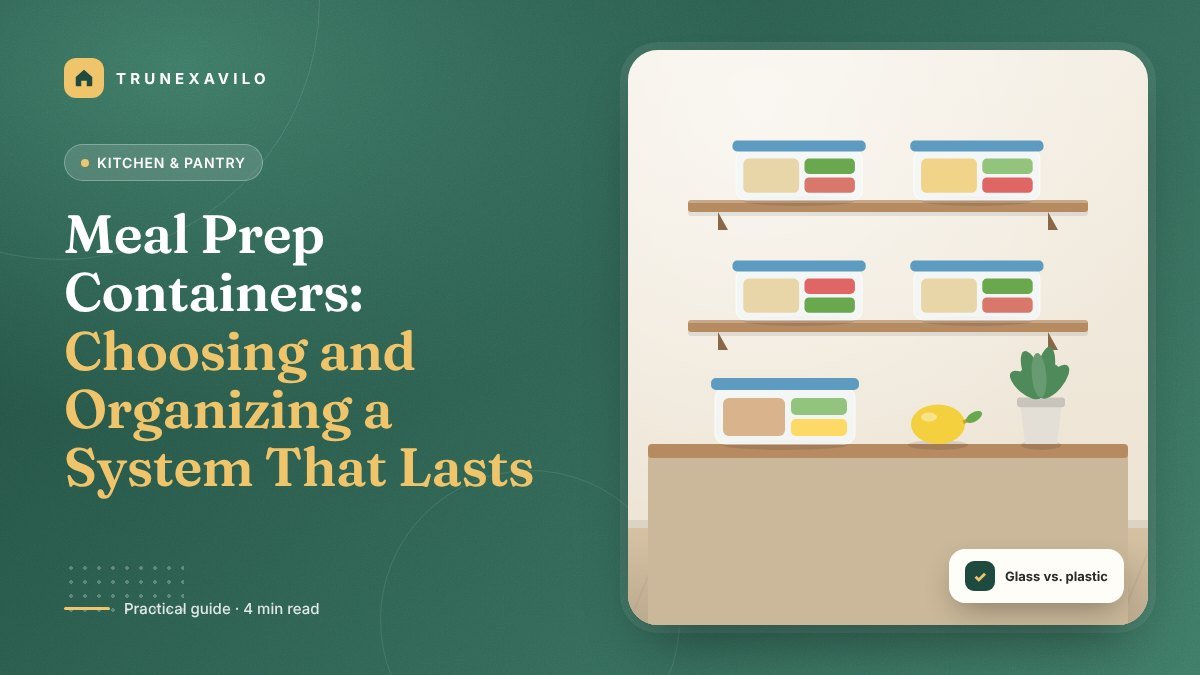
Meal Prep Containers: Choosing and Organizing a System That Lasts
How to choose the right meal prep containers (glass vs. plastic, sizes, lids) and organize them so your cabinet stays tidy and your weekly prep goes faster.
On this page
Meal prep is one of the most effective ways to save money and time on food, but it can create a storage problem. Mismatched containers and missing lids turn a helpful habit into a daily hassle. The fix is simple: choose a small, consistent system and organize it well.
Why a Consistent System Matters
When containers come in random brands and sizes, lids don't fit, stacks topple, and you spend more time searching than cooking. A consistent system means:
- Every lid fits several containers.
- Containers nest neatly when empty and stack neatly when full.
- You can plan portions more easily because sizes are predictable.
Glass vs. Plastic: Which Is Better?
Both have advantages. Many households end up with a mix.
| Feature | Glass | Plastic |
|---|---|---|
| Durability | Doesn't stain or hold odors, but can break | Lightweight, less likely to break, may stain |
| Weight | Heavier | Lighter, easier for lunches on the go |
| Microwave use | Generally microwave-safe (check lids) | Only if labeled microwave-safe |
| Oven use | Many glass bases are oven-safe (check manufacturer) | Not oven-safe |
| Cost | Higher upfront | Lower upfront |
Always follow the manufacturer's instructions. Lids, even on glass containers, are often plastic and may not be microwave- or oven-safe. Avoid moving glass directly from the freezer to a hot oven, since sudden temperature changes can cause some glass to crack.
Pick Two or Three Sizes
You don't need a 40-piece set. Most meal preppers do well with:
- Single-meal containers (about 2 to 3 cups) for lunches and dinners
- Small containers (about 1 cup or less) for snacks, sauces, and dressings
- Large containers for batch-cooked grains, proteins, or soups
Choose sizes from the same product line so lids are interchangeable.
Features Worth Paying For
- Leak-resistant lids with a seal, especially for soups and sauces
- Rectangular or square shapes, which use fridge and cabinet space more efficiently than round ones
- Dishwasher-safe materials for easy cleanup
- Compartment containers if you like keeping foods separated
How Many Containers Do You Need?
Count the meals you plan to prep each week, then add a few extra for leftovers and snacks. For example, a person prepping five lunches might keep about eight to ten single-meal containers plus several small ones. Buying more than you need simply adds clutter.
Organizing Your Container Cabinet
Nest Bases by Size
Stack containers inside one another by size. Keep each size together so you can grab one without unstacking everything.
Store Lids Vertically
Lids are the main source of chaos. Store them upright in a bin, a file organizer, or a dish rack. You can flip through them like files and find the right one immediately.
Use a Deep Drawer if You Have One
A deep drawer can work even better than a cabinet because you see everything from above. Use a simple divider to separate bases from lids.
Keep the Set Near the Fridge or Dishwasher
Place your containers where you use them: near the fridge for packing leftovers or near the dishwasher for easy unloading.
A Simple Weekly Prep Workflow
- Plan: Choose two or three recipes for the week.
- Shop: Buy only what those recipes need.
- Cook: Prep grains, proteins, and vegetables in batches.
- Portion: Fill containers and label them with the contents and date.
- Store: Place them in a dedicated area of the fridge so they're easy to grab.
Following a zone setup like the one in our fridge organization guide helps prepped meals stay visible and get eaten.
Food Safety Reminders
- Cool food quickly by dividing it into shallow containers before refrigerating.
- Most cooked meals are best eaten within three to four days of refrigeration. Freeze portions you won't eat by then.
- Reheat leftovers thoroughly, and follow your container's guidelines for microwave use.
When to Replace Containers
Replace containers that are cracked, warped, deeply scratched, or have lids that no longer seal. Recycle plastic containers according to your local program's rules.
Frequently Asked Questions
Is glass or plastic better for meal prep? Both work well. Glass resists stains and odors and is often oven-safe, while plastic is lighter and easier to carry. Many people use glass at home and plastic for lunches on the go.
How do I stop losing container lids? Buy containers from a single product line so lids fit multiple bases, then store lids upright in a bin or file organizer instead of mixing them in with the bases.
Can I put hot food directly into meal prep containers? It's best to let food cool slightly and divide large batches into shallow containers so they cool quickly in the fridge. Check the manufacturer's guidance for temperature limits.
The Bottom Line
The best meal prep container system is small, consistent, and easy to store. Pick two or three sizes from the same line, choose glass or plastic based on how you eat, store lids vertically, and keep your set close to where you use it. A tidy container cabinet makes it far easier to stick with meal prep week after week.